
Refining the Bridge vs. Removing a Hump: What Rhinoplasty Really Means for Your Profile
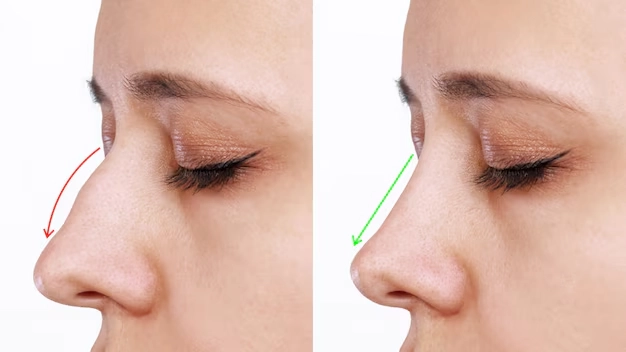
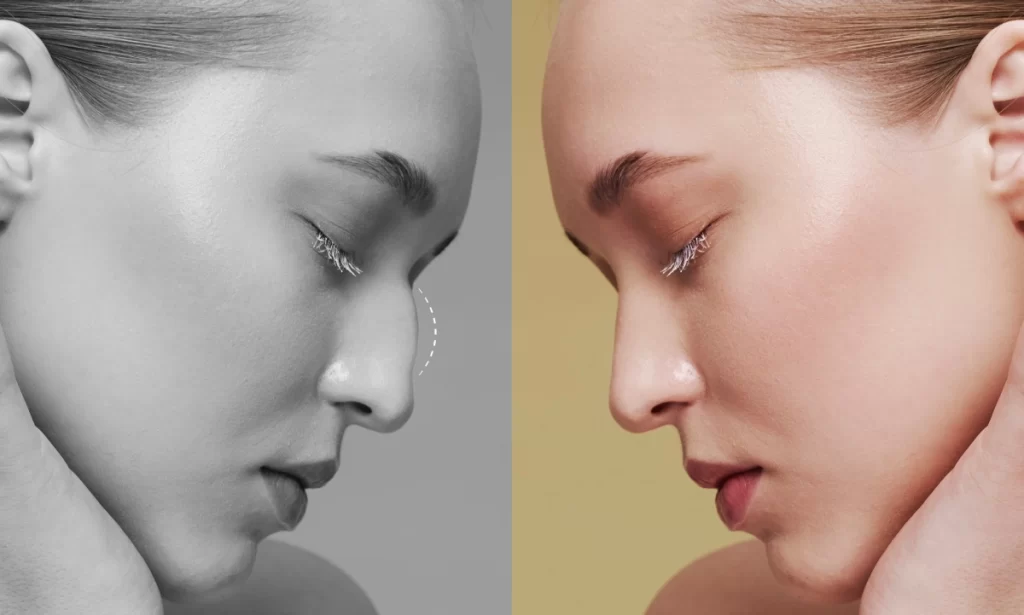
One of the most common things patients say to me in consultation is, “I just want the bridge refined.” Others come in convinced that removing the hump will finally give them the profile they’ve always wanted. At first glance, these requests might sound like two ways of asking for the same thing, but they are not. Refining the bridge and removing a hump are two very different approaches with different goals, techniques, and outcomes. Understanding which one is right for you is essential if you want to love your result. Refinement vs. Removal: The Language Problem When we talk about removing a hump, we’re talking about a structural change. A dorsal hump forms when there’s extra bone, cartilage, or both along the nasal bridge. This creates a bump that stands out in profile and interrupts the smooth line from the forehead to the nasal tip. Removing it means actually reducing the framework of the nose. It’s bold, it’s noticeable, and it’s often the single most dramatic part of a rhinoplasty. Refining the bridge is a very different request. Refinement means polish—smoothing small irregularities, narrowing a bridge that feels too wide, or adjusting the slope so it blends more elegantly with the tip and forehead. Refinement does not usually involve taking down the bridge height. It’s about finesse, proportion, and flow rather than demolition. The confusion arises when patients use the word “refine” as shorthand for “fix the bump.” If you truly want the hump gone, what you’re asking for is removal, not refinement. On the flip side, if the bump is subtle and what really bothers you is width or uneven contour, a structural reduction may be more than you need. Words matter, because a mismatch between what you say and what your surgeon hears can dramatically change your outcome. When the Hump Has to Go For many patients, the dorsal hump is the defining feature they dislike about their nose. In these cases, true hump removal is the only way to achieve harmony. A pronounced hump won’t disappear with a little rasping or minor smoothing—it requires taking down the bone and cartilage that make up that bump. Hump removal can completely change the way a profile reads. Patients often describe the result as lighter, softer, or more balanced. But because the procedure is more invasive, it also carries more responsibility. Once the hump is removed, the nasal “roof” must often be reconstructed so the bridge doesn’t collapse or appear irregular. This can involve precise bone cuts, repositioning, and sometimes grafts to maintain both appearance and breathing. Done well, the effect can be life-changing. Done poorly, the risk is a bridge that looks too flat, uneven, or unstable. That’s why careful planning and conservative reduction are so important. Taking away just enough is the art of hump removal. When Refinement Is Enough Not every bridge calls for such a structural change. Some patients don’t actually have a hump but instead have tiny surface irregularities or a bridge that simply feels too wide for their face. In these cases, refinement makes more sense. Refinement can involve gentle smoothing of bony ridges, subtle adjustments to cartilage, or narrowing the bridge slightly. Sometimes it even includes adding small grafts to create smoother contours. Because the nose’s overall height and support are preserved, recovery tends to be quicker and less dramatic than with full hump removal. The trade-off, of course, is that the change is more subtle. Refinement can beautifully polish a nose that already has good structure, but it won’t erase a significant hump. Choosing refinement when removal is really needed often leaves patients disappointed that their “before” and “after” don’t look all that different. The Gray Zone: What About Preservation Rhinoplasty? In recent years, a technique called preservation rhinoplasty has gained attention. Instead of shaving off the hump from the top, surgeons lower the bridge from underneath, keeping more of the external surface intact. The idea is to maintain the natural roof of the nose while still reducing height. For some noses, preservation can blur the line between refinement and removal. It often produces smoother transitions and may reduce the risk of visible irregularities. However, it’s not the right solution for every patient, and it requires a surgeon with specific training and experience. While it is an option some surgeons offer, it’s not a technique I use in my own practice. I mention it here because patients often read about it online and ask, “Should I have this done?” The answer depends entirely on anatomy and goals, and it’s important to understand that not every technique is appropriate for every nose. Common Missteps and Misconceptions One of the biggest pitfalls in rhinoplasty is vague communication. Patients sometimes say “refine the bridge” when what they mean is “please remove this hump.” That can set the stage for under-treatment, where a bump is still visible after surgery and the patient feels nothing really changed. The opposite can also happen: a surgeon hears “hump removal” and takes down too much when the patient really only wanted a smoother contour. That over-correction can leave the bridge looking flat or artificial and may even compromise nasal function. Another misconception is the belief that a completely straight dorsum is always the ideal. In reality, a nose that’s too flat or ruler-straight often looks unnatural. A gentle curve or slight variation usually reads more balanced and flattering. The goal is harmony, not erasing all character. What Recovery Really Looks Like Recovery after hump removal and bridge refinement can feel very different. With hump removal, there’s usually more swelling, more bruising, and a longer wait before the final shape emerges. The underlying framework has been significantly altered, and it needs time to settle. With refinement alone, recovery tends to be smoother. Because the structural changes are smaller, swelling is usually less pronounced and the improvements appear sooner. That said, the more subtle the surgery, the more subtle the result—so it’s important to go in with realistic expectations. Either way, final results always
Refining the Bridge vs. Removing a Hump: What Rhinoplasty Really Means for Your Profile Read More »