
Uncategorized

Can A Facelift Cause Hair Loss?

Facelift surgery involves lifting and tightening the skin on your face and neck, which can help to smooth out wrinkles and create a more youthful appearance. However, some patients have reported experiencing hair loss or thinning after the procedure. While this is a relatively rare side effect, it’s essential to understand the potential risks and how to minimize them. Can a Facelift Cause Hair Loss? During a facelift, your surgeon will make incisions around the hairline and behind the ears to lift and tighten the skin. This can cause some trauma to the hair follicles, leading to temporary or permanent hair loss. However, the risk of hair loss can be minimized by choosing a skilled and experienced surgeon who is careful during the procedure, such as Dr. Victoria Givens. Factors That Contribute to Hair Loss After Facelift If you are experiencing hair loss after a facelift, several factors may have contributed to it. Understanding these factors can help you determine the cause of your hair loss and take appropriate action: Surgical Techniques: During your facelift, surgical techniques can impact hair loss. If the surgeon uses a process that involves pulling the skin too tightly, it can cause tension in the hair follicles, leading to hair loss. Additionally, if the surgeon makes incisions too close to the hairline, it can also result in hair loss. Patient’s Health: Your overall health can also play a role in hair loss after a facelift. If you have a pre-existing medical condition that affects your hair, such as alopecia, it can increase the likelihood of hair loss. Smoking, poor nutrition, and stress can also contribute to hair loss. Post-Surgical Care: The care you take after your facelift can also impact your hair loss. If you do not follow the post-surgical instructions your surgeon provides, it can increase the risk of hair loss. Preventing Hair Loss After a Facelift After your facelift, your surgeon will provide specific instructions on caring for your incisions and overall health. Following these instructions closely is essential to ensure proper healing and reduce the risk of complications, including hair loss. Here are some tips for proper post-surgical care: Keep your head elevated for the first few days after surgery to reduce swelling and promote healing. Avoid strenuous activities and heavy lifting for at least two weeks after surgery. Use gentle, non-abrasive shampoo, and avoid pulling or tugging on your hair when washing or styling. Avoid exposing your scalp to direct sunlight or extreme temperatures for at least six weeks after surgery. Stay hydrated and eat a healthy, balanced diet to support your body’s healing process. Following these tips and your surgeon’s specific instructions can help minimize the risk of hair loss after your facelift. Remember to be patient and give your body the time it needs to heal properly. Contact your surgeon for further guidance if you experience any concerning symptoms, such as excessive hair loss or scalp irritation. Avoid Facelift Hair Loss With Dr. Victoria Givens Although hair loss is a possible side effect of facelift surgery, it is typically a temporary issue that resolves on its own. Patients who experience hair loss after a facelift usually see regrowth within six months to a year. The type of procedure performed and the surgeon’s skill and experience can contribute to hair loss. If you’re looking for a board-certified surgeon specializing in surgical and non-surgical treatments of the face and neck, Dr. Victoria Givens of Givens Facial Plastic Surgery in Austin, Texas, is an excellent choice. Our boutique experience is tailored to discerning clients worldwide who want access to the best aesthetic treatments, personalized consultations, customized accommodations, and extended support before, during, and after procedures. Contact us today to learn more about facelift procedures and to schedule a consultation.  Schedule a Consultation

Can A Facelift Cause Hair Loss? Read More »

Are Rhinoplasty And Septoplasty The Same Thing?

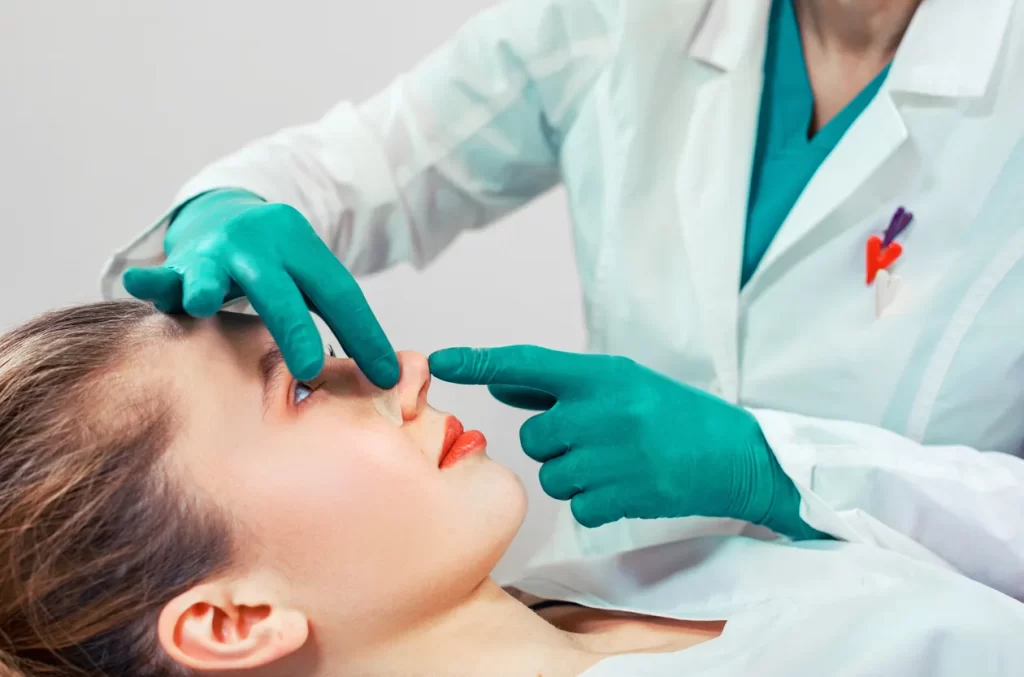
Both rhinoplasty and septoplasty involve surgery on the nose, but they have very different goals. Rhinoplasty is a cosmetic procedure used to improve the nose’s appearance, while septoplasty is a functional surgery used to improve breathing and correct structural issues. Let’s examine the differences and discuss choosing the best procedure for your aesthetic goals. Rhinoplasty Reshapes the Nose Rhinoplasty is a cosmetic surgery that is performed to reshape the nose. This procedure can change the nasal size, shape, and appearance. Rhinoplasty is often used to correct cosmetic issues such as: A crooked nose A bump on the bridge of the nose A nose that is too large or too small A nose that is misshapen due to injury or trauma Your surgeon will make incisions inside or outside the nose during the procedure, depending on the specific technique used. She will then reshape the bone and cartilage of the nose to achieve the desired result. Finally, the skin is draped back over the new nose framework and sutured closed. Rhinoplasty is performed under general anesthesia. Most patients can return to work and normal activities within 1-2 weeks. Septoplasty Corrects a Deviated Septum Septoplasty, on the other hand, is a surgical procedure to correct a deviated septum. The septum is the cartilage and bone that separates the two nostrils. When the septum is deviated, it can cause breathing problems and other issues. Septoplasty is often used to correct these problems by straightening the septum and improving airflow through the nostrils. During the procedure, your surgeon will make incisions inside the nose and lift the mucous membrane lining to access the septum. Next, she will straighten and reposition the septum to improve airflow through the nostrils. Sometimes, the surgeon may also remove excess bone or cartilage to improve breathing further. Septoplasty is performed under general anesthesia. Most patients can return to work and normal activities within a week or two. How To Choose Between Rhinoplasty And Septoplasty Choosing between rhinoplasty and septoplasty depends on your individual needs and goals. If you are unhappy with the appearance of your nose and want to improve its shape, size, or overall appearance, then rhinoplasty may be the best option. On the other hand, if you are experiencing breathing problems due to a deviated septum, a septoplasty may be the best option. A septoplasty can improve airflow through the nostrils and correct structural issues in the nose. In some cases, both procedures may be performed simultaneously to address cosmetic and functional issues. This is known as septorhinoplasty. Dr. Victoria Givens Can Help You Choose Performing nasal surgery demands advanced surgical skills, a thorough knowledge of intricate nasal anatomy, a keen sense of balance and structural support, and the ability to visualize the outcome. Therefore, choosing the right surgeon is crucial for undergoing a rhinoplasty. Dr. Victoria Givens, a leading female facial plastic surgeon in Austin, is renowned for her exceptional skills in nasal reshaping. Her personalized treatment plan and thorough assessment will enhance your natural facial beauty, resulting in an elegant and refined appearance. Contact us today to learn more about rhinoplasty or septoplasty procedures! Schedule a Consultation

Are Rhinoplasty And Septoplasty The Same Thing? Read More »

Which Facelift Lasts The Longest?

Facelift surgery is a popular cosmetic procedure that has been performed for over a hundred years and has evolved into several different types. Each type of facelift surgery comes with its own pros and cons, as well as different areas of focus. While most patients will be eligible for various types of facelifts, it is important that they refer to a highly experienced, board-certified surgeon like Dr. Victoria Givens, to determine which type is right for them. Patients often ask the question, “Which type of facelift lasts the longest?” What are the Different Types of Facelifts? Traditional facelift Otherwise known as a rhytidectomy, a traditional facelift is a cosmetic procedure that can reduce signs of aging that develop in the face and neck. During the treatment, incisions are made in the skin around the ears and hairline while the underlying musculature is lifted and tightened. Excess tissue is removed from the face and neck, and then the remaining skin is redraped and sutured in place.  Patients walk away with a smoother, more youthful-looking aesthetic. Traditional facelifts can address multiple signs of aging, including sagging skin, wrinkles, and jowls.  Mini facelift A mini facelift, also known as a mini-lift, is similar to a traditional facelift, only less invasive. While a traditional facelift can treat lower face and neck, a mini facelift is specifically designed to address areas such as the jowls, cheeks, and neck. It is most often recommended for younger patients who are dealing with early signs of aging that are more mild.  The procedure is similar to a traditional facelift. The surgeon will make small incisions around the ears and hairline before lifting and tightening the underlying facial muscles and tissues. Excess skin is removed before the remaining facial skin is draped over the treatment area.  Patients walk away with a youthful and refreshed appearance and less scarring compared to a traditional facelift. There is also a much shorter recovery period. However, it is important for patients to keep in mind that a mini facelift may not provide as dramatic of a result as a traditional facelift and may need to be repeated to maintain the desired look. Deep plane facelift A deep plane facelift is another version of a facelift that focuses on the deeper layers of the face, including the muscles and tissues that are involved in facial movements and expressions.  Unlike a traditional facelift, which focuses on the superficial layers of the skin, a deep plane facelift works by making incisions near the hairline and around the ears, then lifting and repositioning the underlying facial muscles and tissues. This technique allows for a more natural-looking result, as it addresses the underlying causes of facial aging rather than simply tightening the skin.  The recovery time for a deep plane facelift is typically longer than that of a traditional facelift, and the procedure may be more invasive. However, for patients who are looking for a more comprehensive approach to facial rejuvenation, a deep plane facelift may be a good option. Which Type of Facelift Elicits the Longest-Lasting Results? Generally speaking, facelift surgery provides similar longevity results regardless of the type of procedure employed. That said, the duration of results can be different for every patient. Typically, a deep plane facelift is considered to be the longest-lasting option, as the results can last anywhere from ten to fifteen years. The deep plane facelift is naturally a more comprehensive treatment as it addresses both the skin and underlying muscle. The techniques used are designed to minimize tissue trauma and optimize the youthful sections of facial tissue to achieve a more natural-looking outcome. As with all of these procedures, a deep plane facelift at Givens Facial Plastic Surgery will require a comprehensive consultation with Dr. Victoria Givens beforehand. Contact us today to learn more and find which facelift approach is best for you.  Schedule a Consultation

Which Facelift Lasts The Longest? Read More »

Get Rid Of Facial Moles With This Simple 5-minute Procedure

The average person will accumulate 10 – 40 new moles throughout their lifetime. With those stats, chances are high that you will develop a mole that you may not like. In fact, surveys shows that 9 out of 10 people have a mole that they want to get rid of.  Why Are We Prone to Developing New Moles? A mole forms when skin cells grow in clusters. Moles can be flat, raised, round, oval, pink, red, brown, or flesh colored. And, it is not uncommon for moles to have dark, coarse hair growing through them. While moles can result from sun damage, there are often other factors such as genetic propensity that make it difficult to completely prevent mole development. Moles and Skin Lesions Can Be Removed in as Little as 5 Minutes! Moles are removed for several reasons including unflattering appearance, concern for skin cancer, and improvement in skin texture and tone. A mole removal is a quick, in-office procedure that utilizes a simple numbing injection. Depending on the mole, various techniques may be used.  A surface level mole can be shaved off, while a deep-rooted mole can be excised and sealed with just a couple stitches. Regardless of technique, the skin will heal over the course of the next few weeks allowing you to radiate with confidence. It is important to seek a highly educated and experienced professional, especially when removing moles from facial skin. Tired Of Looking At A Mole Or Skin Lesion? – Request A Consultation When it comes to your face, there is no reason to compromise on quality. Dr. Victoria Givens is a highly respected facial plastic surgeon in Austin, Texas, with extensive experience in the art of anti-aging. A consultation with our office is required to create a comprehensive, customized approach for your aesthetic goals. What are you waiting on? Get in touch with Givens Facial Plastic Surgery today! Contact Us

Get Rid Of Facial Moles With This Simple 5-minute Procedure Read More »

Looking For a More Permanent Option Than Lip Filler?

Not satisfied with lip filler? Want to avoid continually refilling the lips with filler? Looking for a longer lasting, more permanent fix to your aesthetic goals?  In office, Dr. Givens uses the highest quality hyaluronic acid dermal fillers for non-surgical lip enhancement. Filler is great for improving lip symmetry, hydration, and volume. However, filler is typically needed to be repeated every 6 to 12 months and aging is inevitable, meaning the body changes over time. The area between the nose and the upper lip tends to increase with age, leaving the upper lip to be either minimally visible even after filler or worse– pushed out with a duck-like appearance. So, what is another option that withstands aging and does not need to be continually maintained? Keep reading. A lip lift is a surgical procedure in which the distance between the bottom of the nose and the top of the upper lip is decreased to reveal a more volumized top lip. And, this treatment can be performed in the office in less than an hour! Ultimately, a lip lift can offer a more natural, youthful appearance compared to filler and have longer lasting results. What else can we say? It’s the perfect solution to permanently making the lips look more pronounced and beautiful.  Request a Consultation When it comes to your face, there Is no reason to compromise on quality. Dr. Victoria Givens is a board-certified facial plastic surgeon who not only performs lip lifts on regular basis but has also developed an advanced technique that will leave you more than satisfied. Get in touch with Givens Facial Plastic Surgery to learn more! Schedule a Consultation

Looking For a More Permanent Option Than Lip Filler? Read More »

The Injectable That Is Changing The Filler Game

Did you know that collagen is the main protein responsible for keeping the skin smooth, volumized, and elastic as we age? Unfortunately, collagen production decreases by 1% each year after the age of 20. That’s a lot if you really think about it! And, this reduction in collagen production leaves the face dehydrated, susceptible to fine lines and wrinkles, and eventually hollow in appearance. So, what is the answer? Historically, hyaluronic acid (HA) dermal fillers have been used to treat age-related changes to affected areas of the face and neck including the temples, under eyes, cheeks, chin, jawline, and smile lines. Injectable HA dermal fillers work by filling in lines and wrinkles while also providing enough volume to lift and restore the tissues to their natural position. But, are dermal fillers really the best that we can do? Not so fast. It’s time to consider an amazing biostimulatory injectable that rebuilds collagen over time. Introducing Sculptra Aesthetic, the anti-aging injectable treatment performed in the office that naturally stimulates and accelerates collagen production. What makes Sculptra any different from dermal fillers? Sculptra does far more than the average filler, which aims to temporarily fill and smooth away age-related changes. It acts as a scaffold to restore collagen and reverse signs of aging for a refreshed, youthful appearance. In other words, Sculptra activates natural regeneration within the skin to restore facial volume while reducing the appearance of lines and wrinkles for a more youthful, radiant appearance. One very important thing to note is that Sculptra results are NOT immediate, which is very unlike the instant but temporary effects of dermal fillers. By acting as a scaffold, Sculptra Aesthetic lays down the foundation for your body to do the work and naturally stimulate collagen production over time. This is why Sculptra results can last up to 2 years while dermal fillers must be re-injected every 6-12 months! The benefits and possibilities of Sculptra are endless, which is exactly why this product is changing the filler game. Wait No More – Request A Consultation When it comes to your face, there is no reason to compromise on quality. Dr. Victoria Givens is a highly respected facial plastic surgeon in Austin, Texas, with extensive experience in the art of anti-aging. A consultation with our office is required to create a comprehensive, customized approach for your aesthetic goals. What are you waiting on? Get in touch with Givens Facial Plastic Surgery today! Contact Us

The Injectable That Is Changing The Filler Game Read More »

At What Age Should I Get A Facelift?

There is a common misconception that you should wait until you are about 60 years old to have a facelift. And, while 60 years young is a great age to have this procedure, there are some captivating reasons to consider having a facelift done at a younger age.  A facelift, is a cosmetic surgical procedure that targets the cheeks, jowls, and neckline as well as fine lines and wrinkles to give a more youthful appearance. Patients with skin laxity, a double chin, jowl formation, and neck banding, independent of their actual age, are excellent candidates for a facelift.  Having a facelift performed earlier in life, such as in your 40s or 50s, has a number of benefits. Younger individuals tend to require less invasive surgery with a quicker recovery. In addition, many do not like the idea of undergoing a surgery that results in a very dramatic outcome in conjunction with a longer healing time. So, what is the ideal age for a facelift? Simply put, the best age to consider a facelift is when you are ready, regardless of number. Everyone ages differently, which is why there is not a defined time period to undergo a facelift. When signs of aging become prevalent enough to affect your self-confidence, then it’s time to consider your options. Wait No More – Request A Consultation When it comes to your face, there is no reason to compromise on quality. Dr. Victoria Givens is a highly respected facial plastic surgeon in Austin, Texas, with extensive experience in the art of deep-plane facelift surgery. A consultation with our office is required to create a comprehensive, customized approach for your aesthetic goals. What are you waiting on? Get in touch with Givens Facial Plastic Surgery today! Schedule a Consultation

At What Age Should I Get A Facelift? Read More »

Worried About A Scar From A Rhinoplasty?

Ready to transform your life with a surgical procedure, but worried about having a noticeable scar? You are not alone.  A rhinoplasty, also known as a “nose job”, is a surgical transformation of the nose. This procedure permanently defines the contours of the nose, minimizes visible signs of aging, and removes nasal obstruction.   Any procedure that makes an incision or cut on the face or body will leave a scar. However, it is the VISIBILITY of the scar that actually matters! So, what is the secret behind a beautiful “scarless” rhinoplasty? Simply put, it is the placement of incisions, treatment technique utilized, and surgeon experience that are the key components to a successful outcome. Two different approaches can be utilized during a surgical rhinoplasty. An open rhinoplasty leaves a single nearly invisible fine line on the columella (ie, the skin between the nostrils) once healed, while a closed rhinoplasty leaves no external marks due to incisions only located within the nasal structure. Depending on your goals and inherent anatomy, you may qualify for one or both approaches. A consultation with Dr. Givens is required to determine your candidacy.  Do not allow the possibility of a scar to hold you back from a rhinoplasty procedure. Dr. Givens has the secret to hiding scar lines and using techniques to avoid scarring for optimal results. Take The Next Step – Request A Consultation When it comes to your face, there is no reason to compromise on quality. Dr. Victoria Givens is a highly respected facial plastic surgeon who not only has immense experience in rhinoplasty surgery but has perfected her technique to minimize any evidence of a scar for her patients. Get in touch with Givens Facial Plastic Surgery to learn more! Schedule a Consultation

Worried About A Scar From A Rhinoplasty? Read More »

Say Good-bye to Your “Turkey Gobbler” by the Holidays!

With so many things to be thankful for around the holidays, why not add “no more neck waddle” to the list? The year is coming to an end, but there’s still time to make it one to remember. It’s the perfect season to schedule your Austin Custom Lift—just in time for the holidays! What is the Austin Custom Lift? The Austin Custom Lift (ACL) is a procedure performed exclusively by Dr. Victoria Givens to improve, lift, and rejuvenate the lower face and neckline. This all in one treatment reduces visible signs of aging, revolumizes the face, slims the neckline, and restores a naturally, youthful appearance. When is the best time to have the Austin Custom Lift with Dr. Givens? While there is no time like the present, when it comes to scheduling your Austin Custom Lift, setting aside downtime for recovery and planning in advance of a “big event” is important. You may need up to three weeks of downtime after your procedure, and a solid eight weeks prior to being completely “take my photo” event ready. What other non-surgical treatments and surgical procedures are recommended before, during, or after the Austin Custom Lift Dr. Givens offers a vast array of facial rejuvenation options for her clients but recommends a private consultation to determine and create an individually-tailored plan that best suits you. Several non-surgical treatments including the Exosome Facial, BOTOX facial, and PRP facial along with a customized skin care regimen are perfect for enhancing your skin quality, complexion, and structure prior to your surgery. In addition, surgical procedures that can be performed at the same time as the Austin Custom Lift include the brow lift, eyelid lift, lip lift, and rhinoplasty. For more information, you can read about each of these treatments and procedures under the Signature Services section of the website prior to scheduling a consultation with Dr. Givens.

Say Good-bye to Your “Turkey Gobbler” by the Holidays! Read More »

Exosomes: The Luxury Treatment That Lives Up To The Hype

Exosomes are the hot, new luxury treatment available for regenerative health of the face and hair. With results that live up to the hype, it’s no surprise that this amazing product is becoming quite the talk of the town. Craving a vibrant, radiant complexion? The exosome facial should be your go-to. Want a return of hair growth without going under the knife? The exosome hair restoration is your golden ticket. But, before you settle for just any brand, you should know that not all exosomes are made equal. What are Exosomes? To understand exosomes, you must first understand where they come from. Exosomes are nanovesicles derived from mesenchymal stems cells (MSCs). They work by generating signals that allow cells within the body to communicate with each and ultimately direct the body’s response to inflammation, injury, and healing. MSC-derived exosomes contain a multitude of growth factors and regulatory molecules that allow for significant tissue repair and regenerative wellness. They do not contain cellular DNA, cannot replicate, have no metabolic activity, and are extensively tested to provide the highest safety profile and purity standards. Which Exosome brand is the best? The current MSC-derived exosomes on the market originate from two main sources—bone marrow or placenta. Exosomes of bone-marrow MSC (BM-MSC) origin are clearly the safest, highest quality, and most effective products available for treatment for several reasons. BM-MSCs have been extensively studied in comparison to placental MSCs, and the results show a much higher safety profile, quality yield, and signaling source. Placental MSCs do not actually contain “younger” cells nor do they have a profile that produces exosomes with more regenerative prowess when compared to BM-MSCs. Rather, exosomes of placental origin often have populations consistent with both fetal and maternal (young and old) components. Placental MSCs often have less ability to differentiate making BM-MSCs more favorable in terms of overall composition and quality for regenerative treatment. Dr. Givens’ Choice: Direct Biologics ExoFlo Direct Biologics is the brand I know and trust when it comes to exosomes. Their product ExoFlo always contains the purest exosomes required for total regenerative wellness. Derived solely from BM-MSCs, their formula guarantees a standout product developed, tested, stored, and distributed under the highest quality standards.

Exosomes: The Luxury Treatment That Lives Up To The Hype Read More »

Scroll to Top